If Dinosaurs Could Gaze Through Ancient Telescopes, Saturn Would Be Without Its Rings
100 x 100 cm
Oil on board
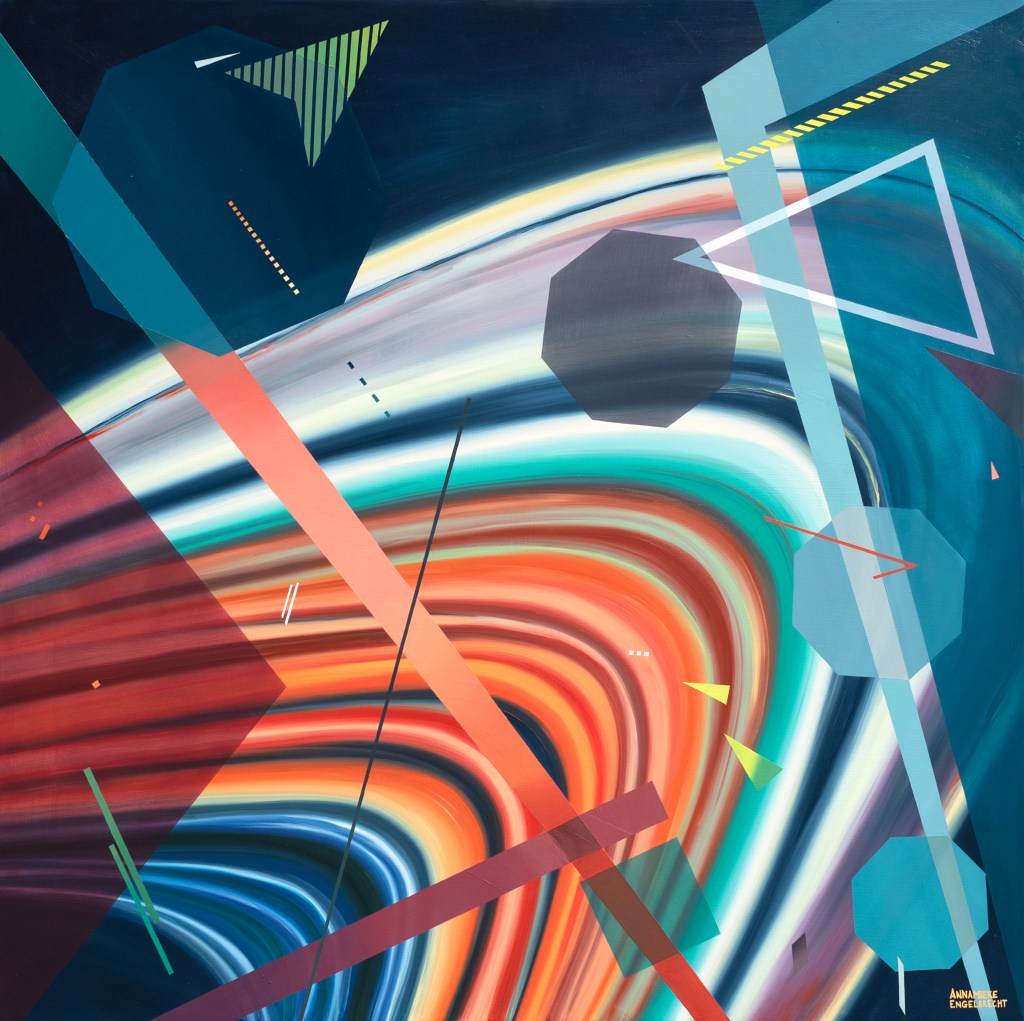
Saturn’s rings, so seemingly eternal to us, are in fact fleeting, a temporary adornment in cosmic time. When Voyager 2 captured its iconic image of Saturn’s rings, it did so by taking three separate photographs, each filtered for a different wavelength of light. The resulting composite is a construct of perception – a reminder that what we see depends on how we choose to observe it.
This painting reflects on that moment of observation, but also on the impermanence of what we assume to be fixed. Scientists estimate that Saturn’s rings are relatively young, possibly forming just 100 million years ago, and that they are disappearing, dissipating as icy debris rains down into the planet’s atmosphere. If the dinosaurs had possessed telescopes to gaze at the sky, they would have seen Saturn ringless, a version of the planet we cannot fathom in our own time.
This title challenges human significance, placing us within the long arc of cosmic history. Just as entire species rise and fall, so too do planetary features we once assumed were timeless. We are a brief moment in Earth’s history, just as Saturn’s rings are a brief moment in the life of the solar system. What we marvel at today will one day be gone, and yet the universe continues, indifferent to our gaze.
Through abstraction, this work embraces the synchrony between perception and reality, between the fleeting and the infinite. This painting reveals the hidden synchrony in Saturn’s rings – a cosmic phenomenon captured through the lens of technology, interpreted through human vision, and ultimately destined to vanish.
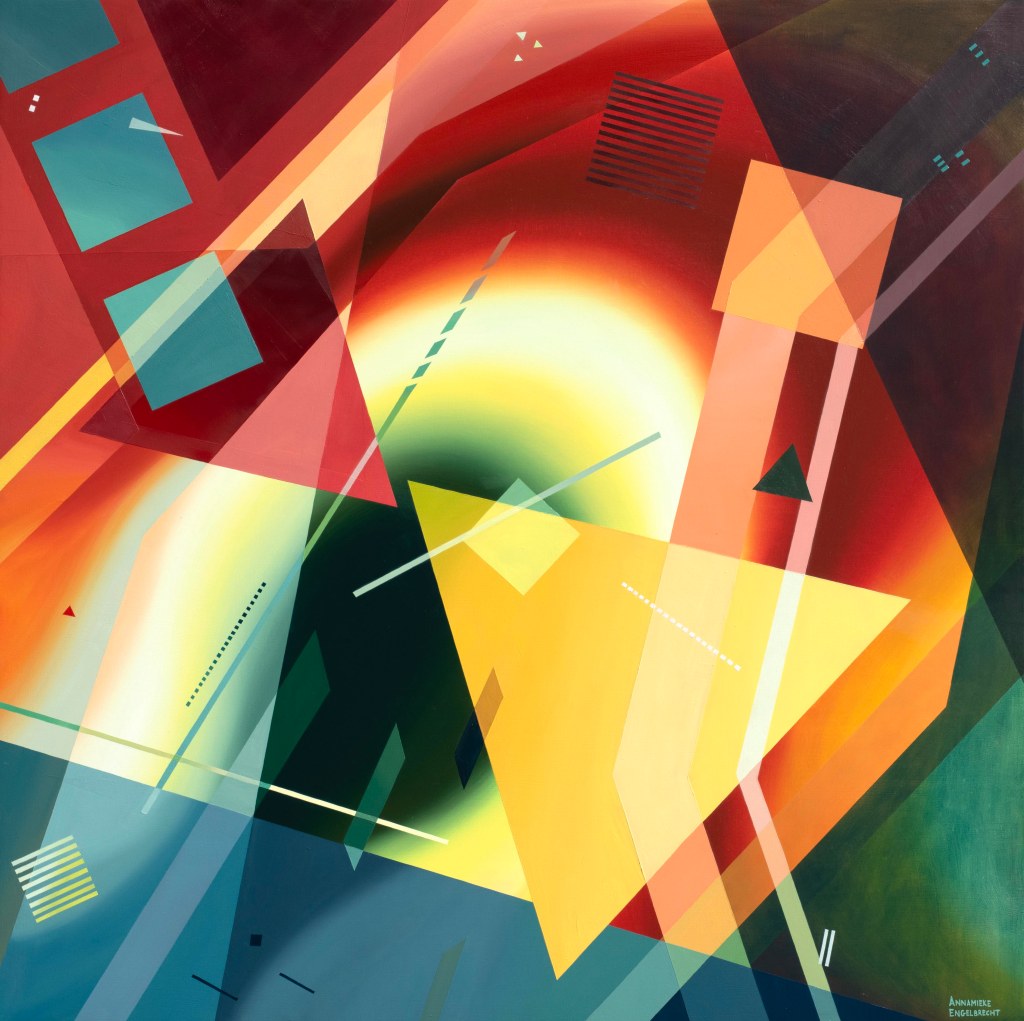
There will come a time when light will no longer reach us, and the sky will go dark
100 x 100 cm
Oil on board
Searching for the Satellites
100 x 100 cm
Oil on board
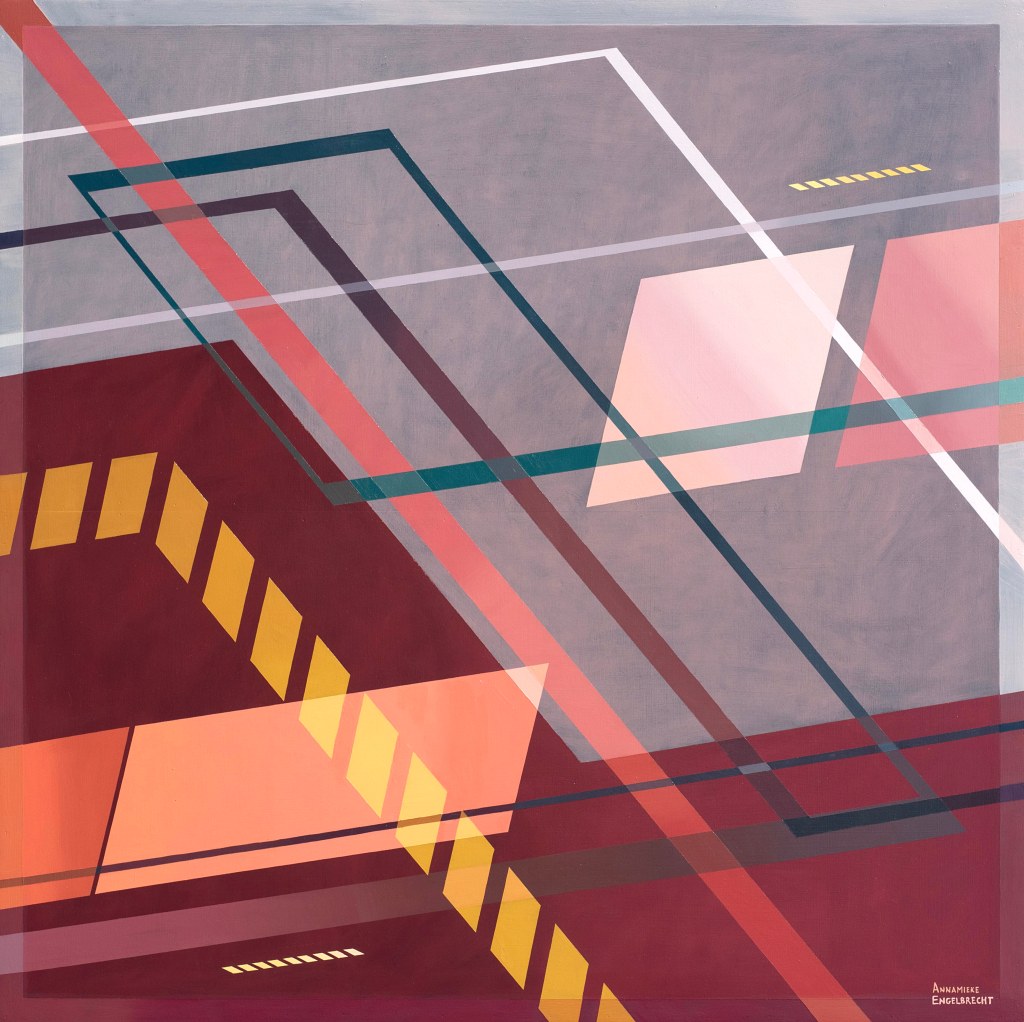
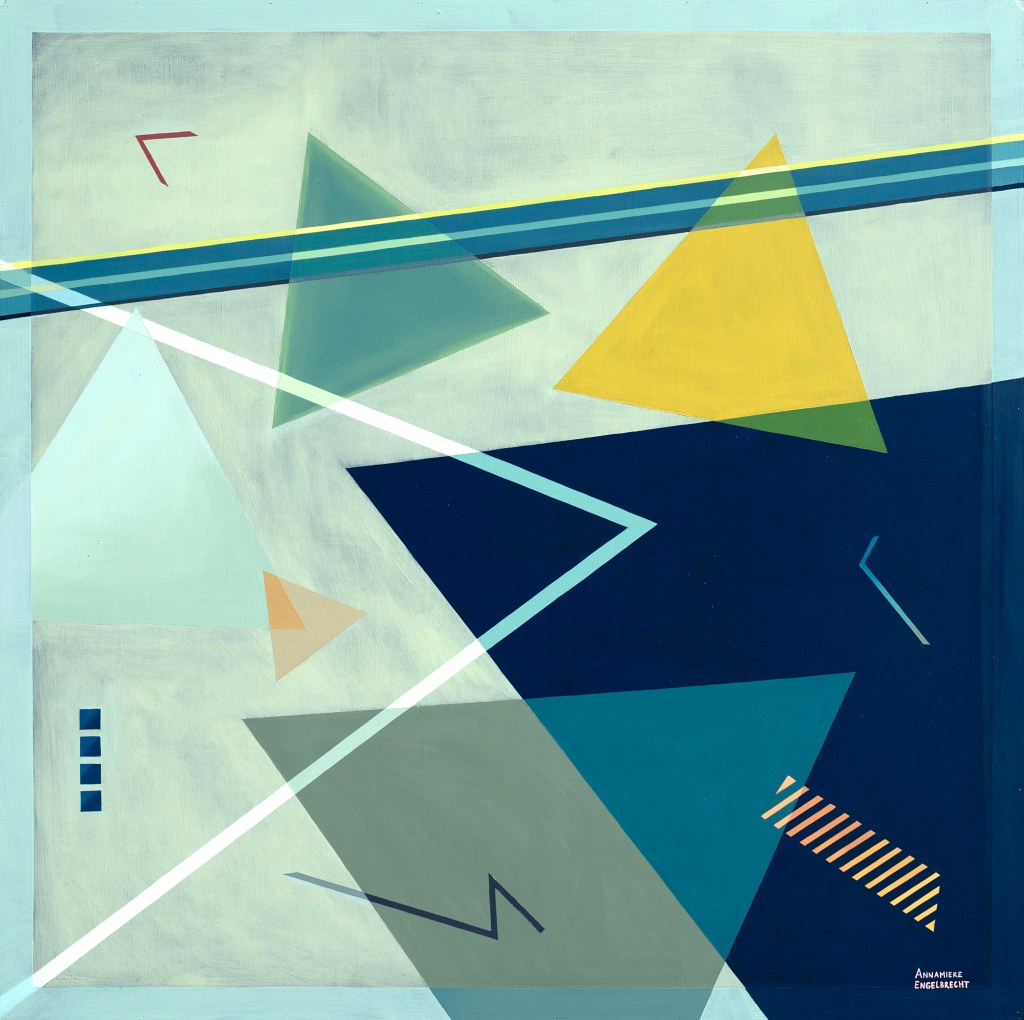
Extraterrestrials helped the ancient Egyptians build the pyramids at Giza
75 x 75 cm
Oil on board
Uncertain Voyage
75 x 75 cm
Oil on board
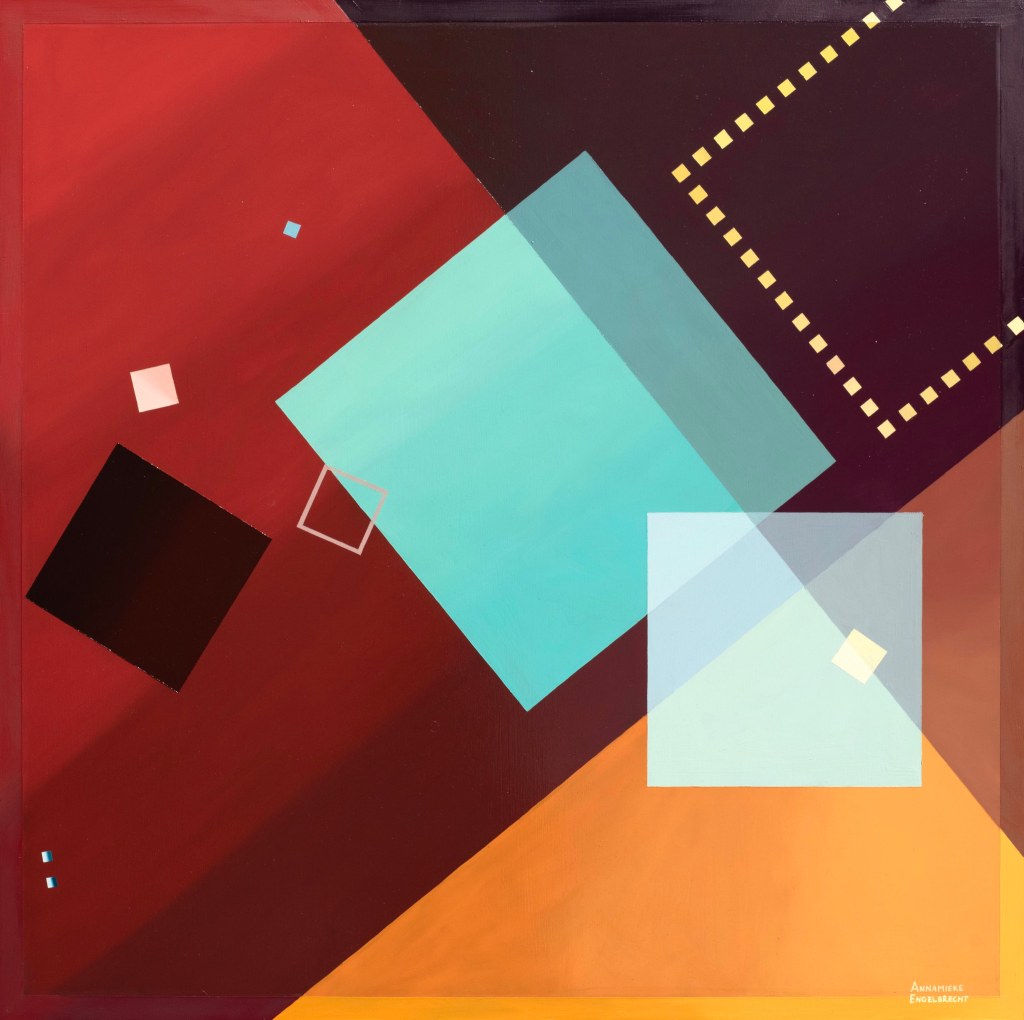
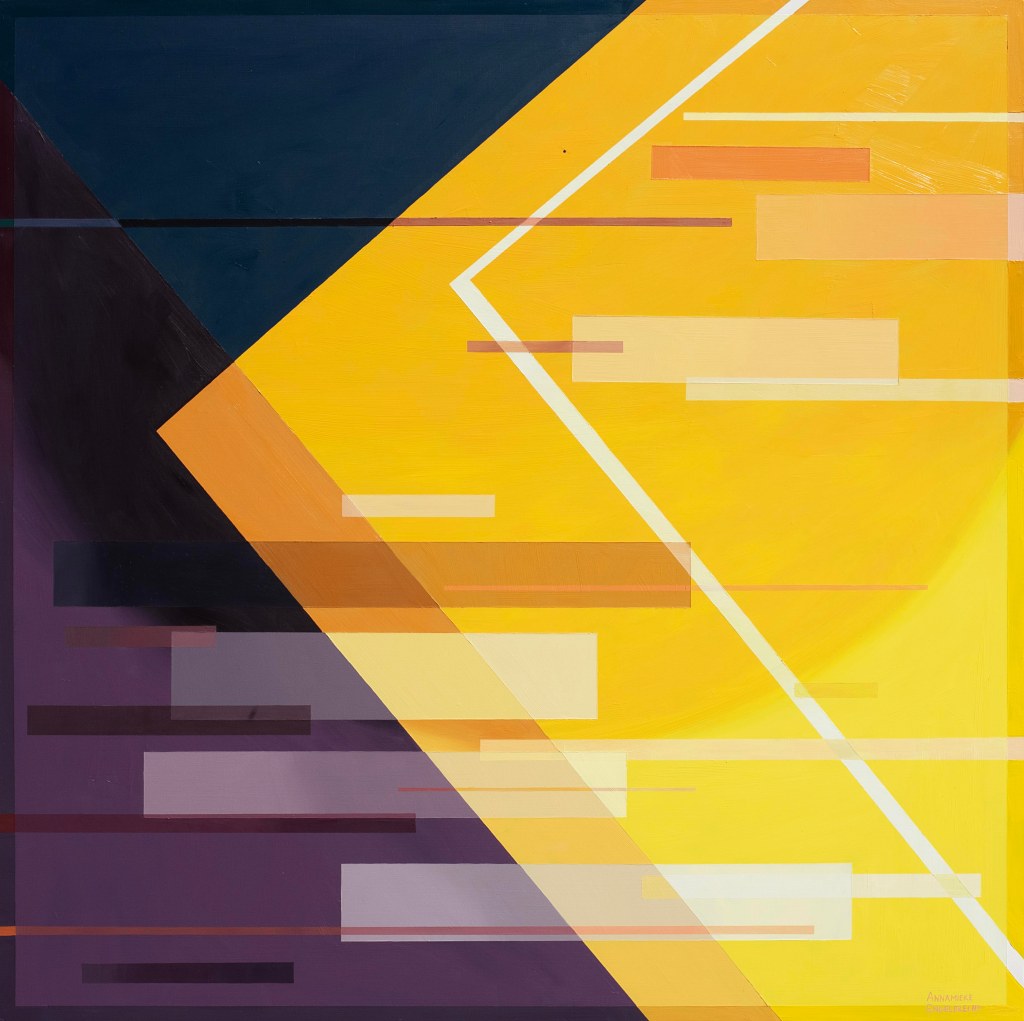
What happens when planets collide?
75 x 75 cm
Oil on board
Scientists believe it began its rampage, after being ejected from a celestial menage-a-trois
75 x 75 cm
Oil on board
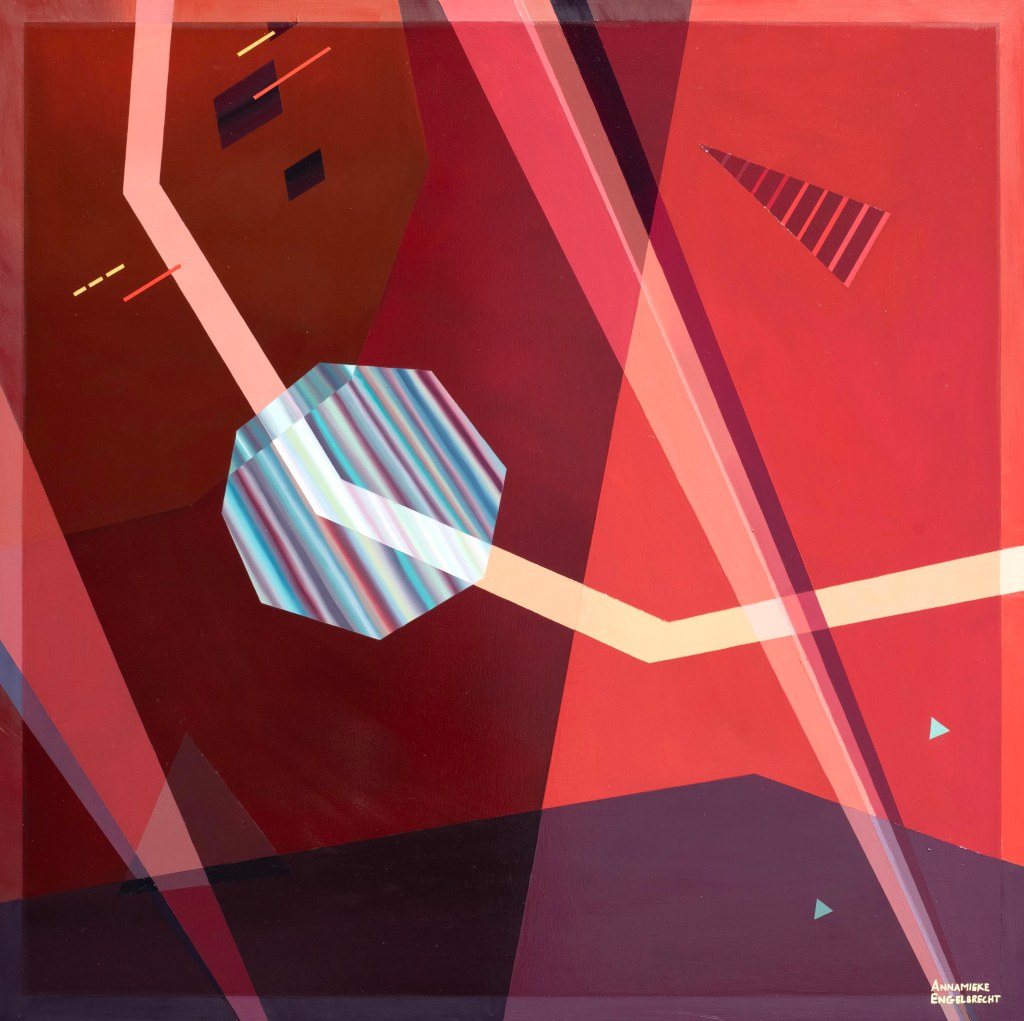
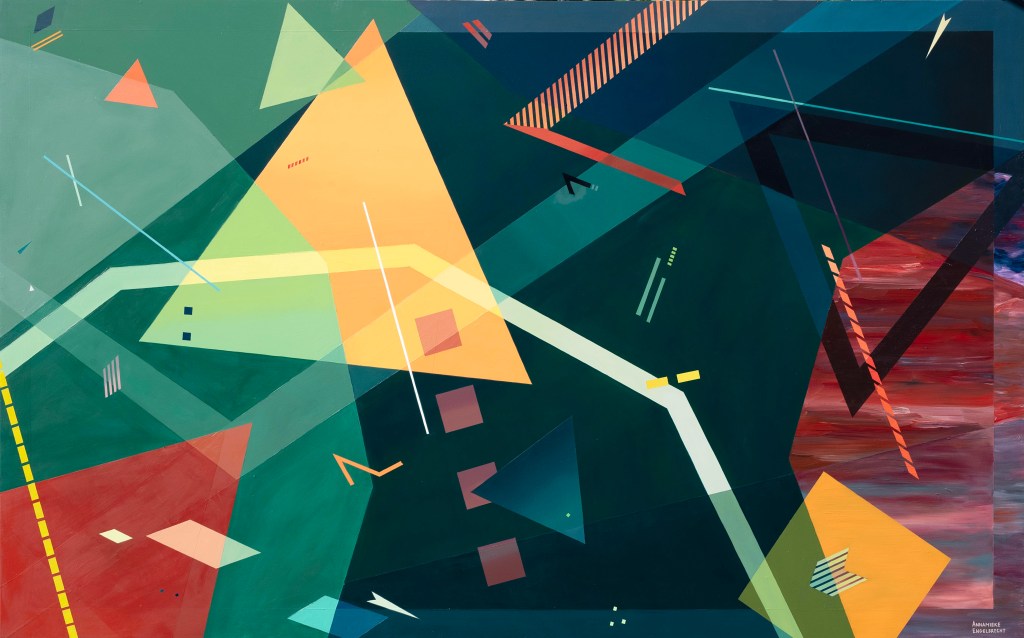
What seismic shift will redefine your understanding of your place in the universe?
100 x 160cm
Oil on board
We are the pathway for the universe to figure itself out
60 x 120 cm
Oil on board
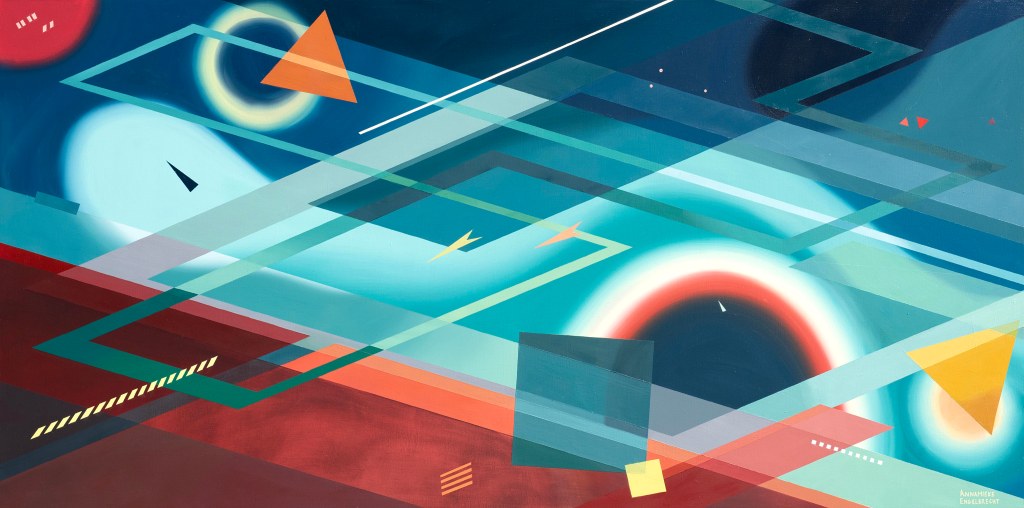
This painting explores the profound idea that humans are not separate from the universe,we are the universe. Made of the same atoms forged in ancient stars, we are cosmic matter that has become conscious, capable of reflecting, questioning, and exploring the cosmos itself. In this way, we are the universe becoming aware of itself. Just as the brain studies its own functions through neuroscience, we, as part of the universe, are trying to understand the very fabric from which we came.
The painting also hints at the recursive mystery of scale. Some theories in quantum physics and speculative cosmology suggest that if you zoom into the fabric of an atom deeply enough, you might find entire universes nested within,each atom potentially a cosmos of its own. This idea echoes the fractal nature of reality, where patterns repeat across vastly different scales, and the boundary between the micro and the macro begins to blur.
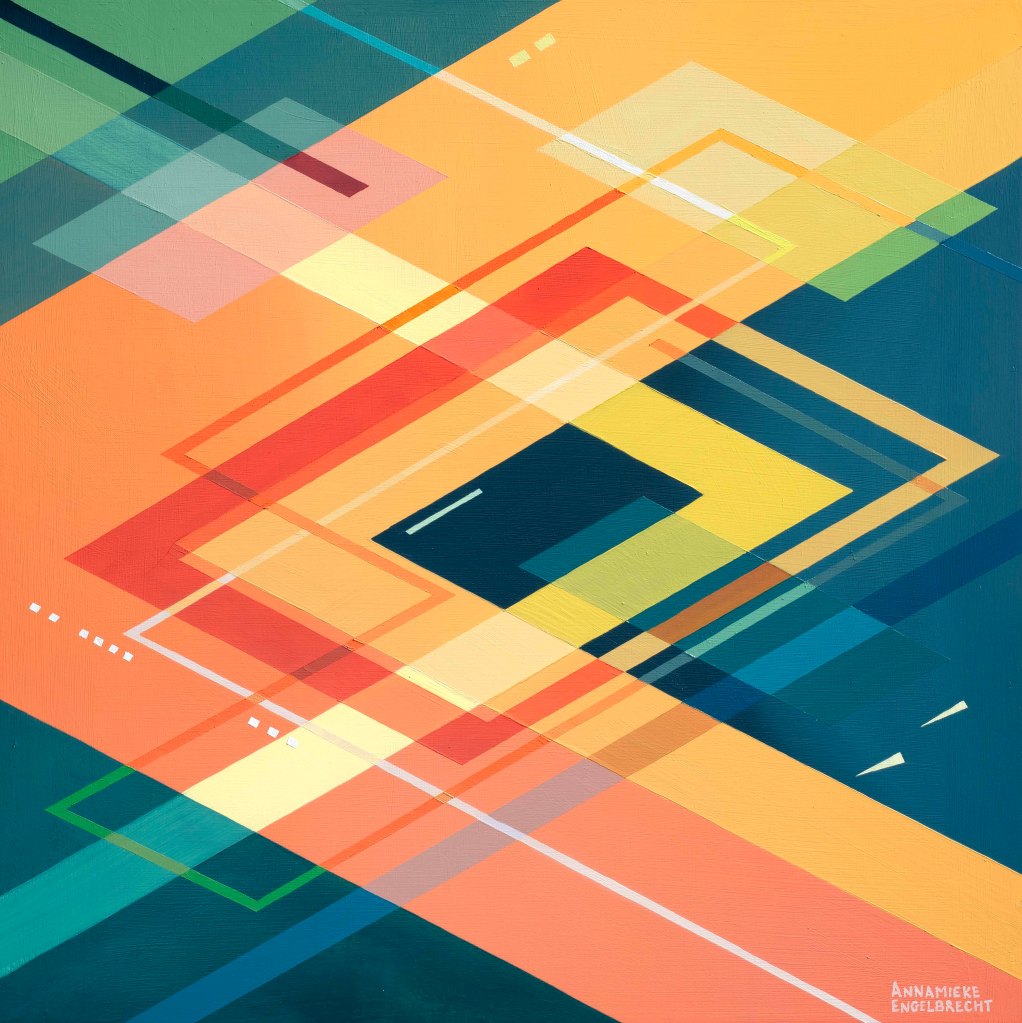
What would the universe look like if you were a photon?
40 x 40 cm
Oil on board
When science becomes the artist’s muse
40 x 40 cm
Oil on board
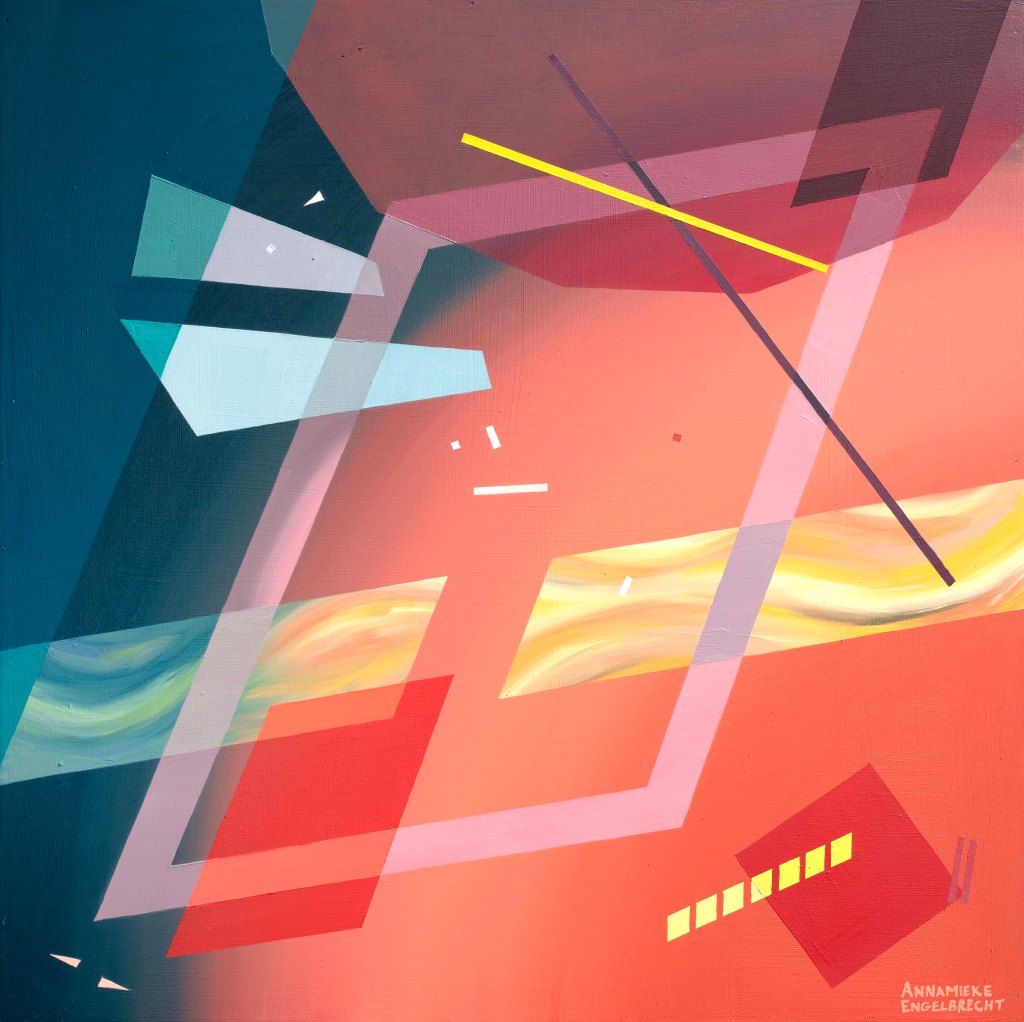
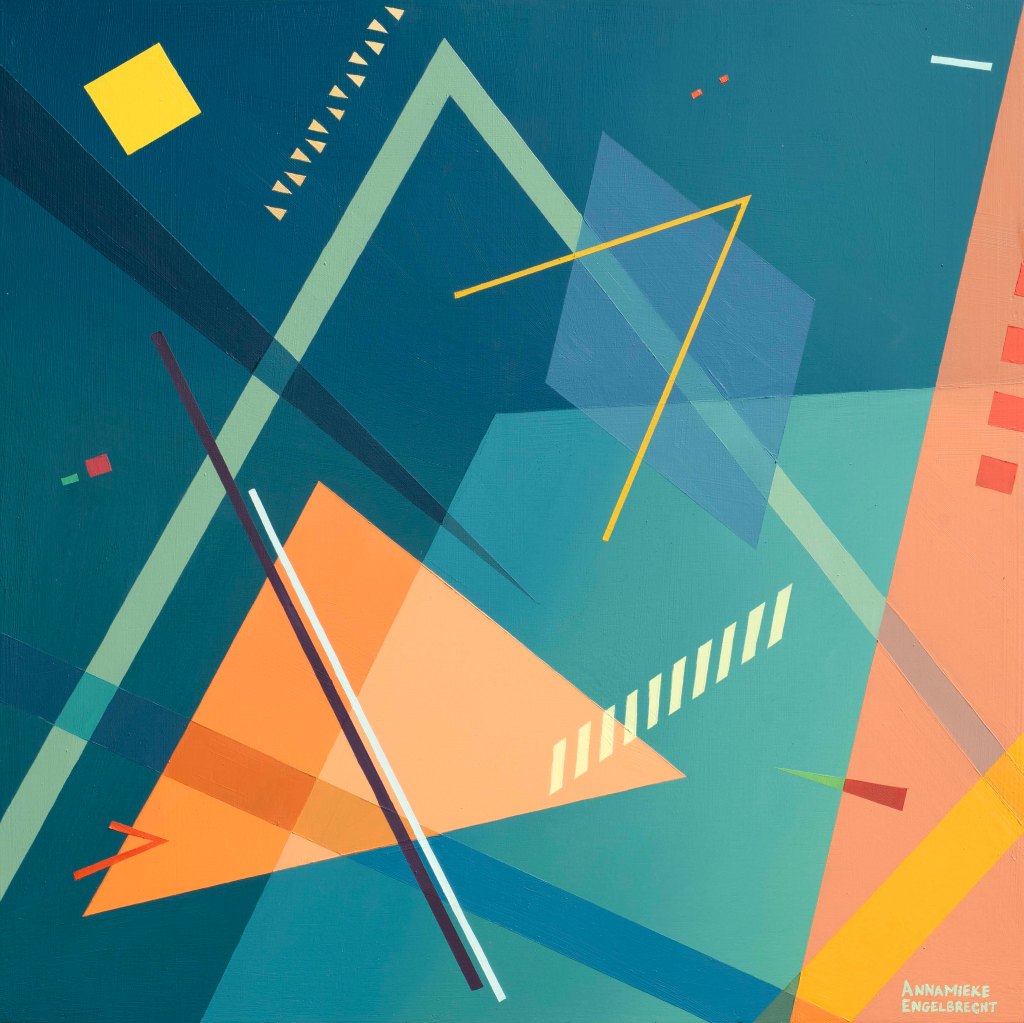
If you ever decide to fall into a Black Hole never choose the tiny one over the larger one
40 x 40 cm
Oil on board
Now my tinfoil hat is looking pretty stylish
40 x 40 cm
Oil on board
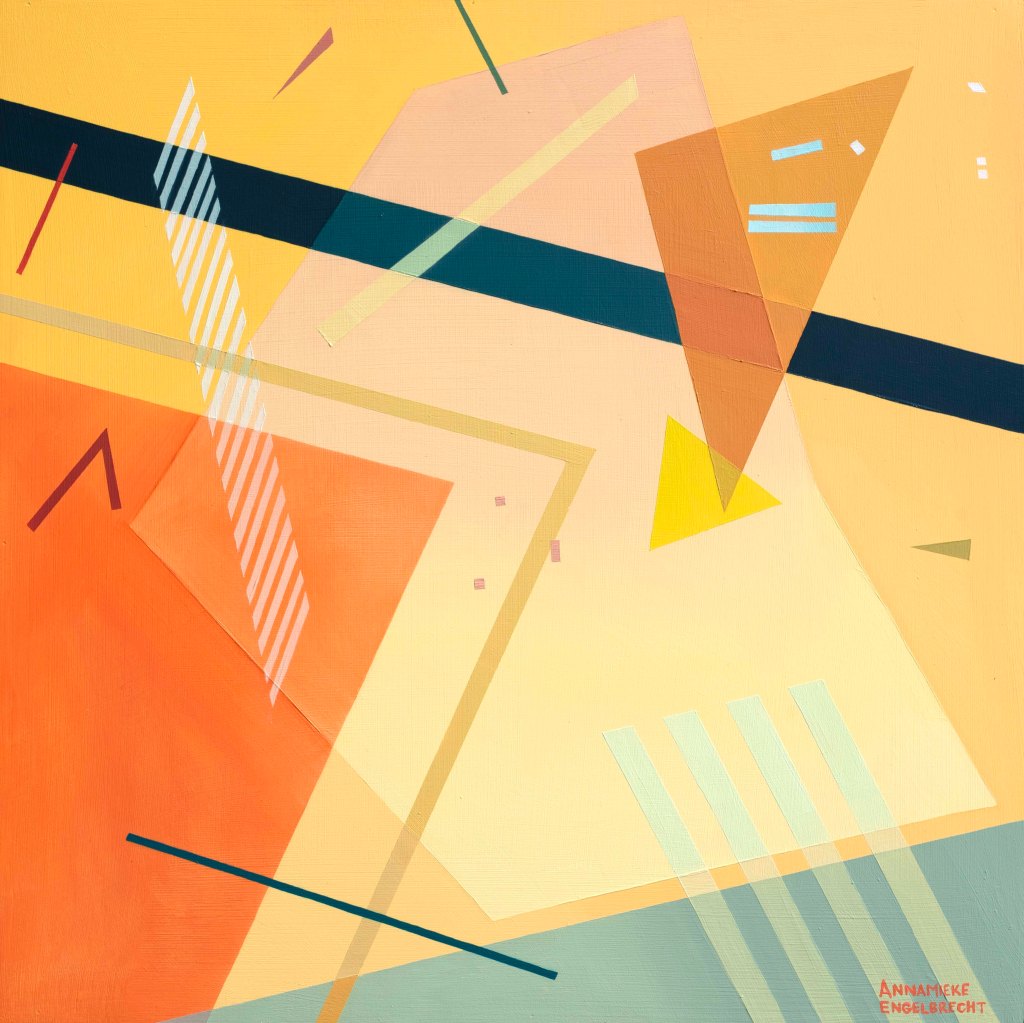
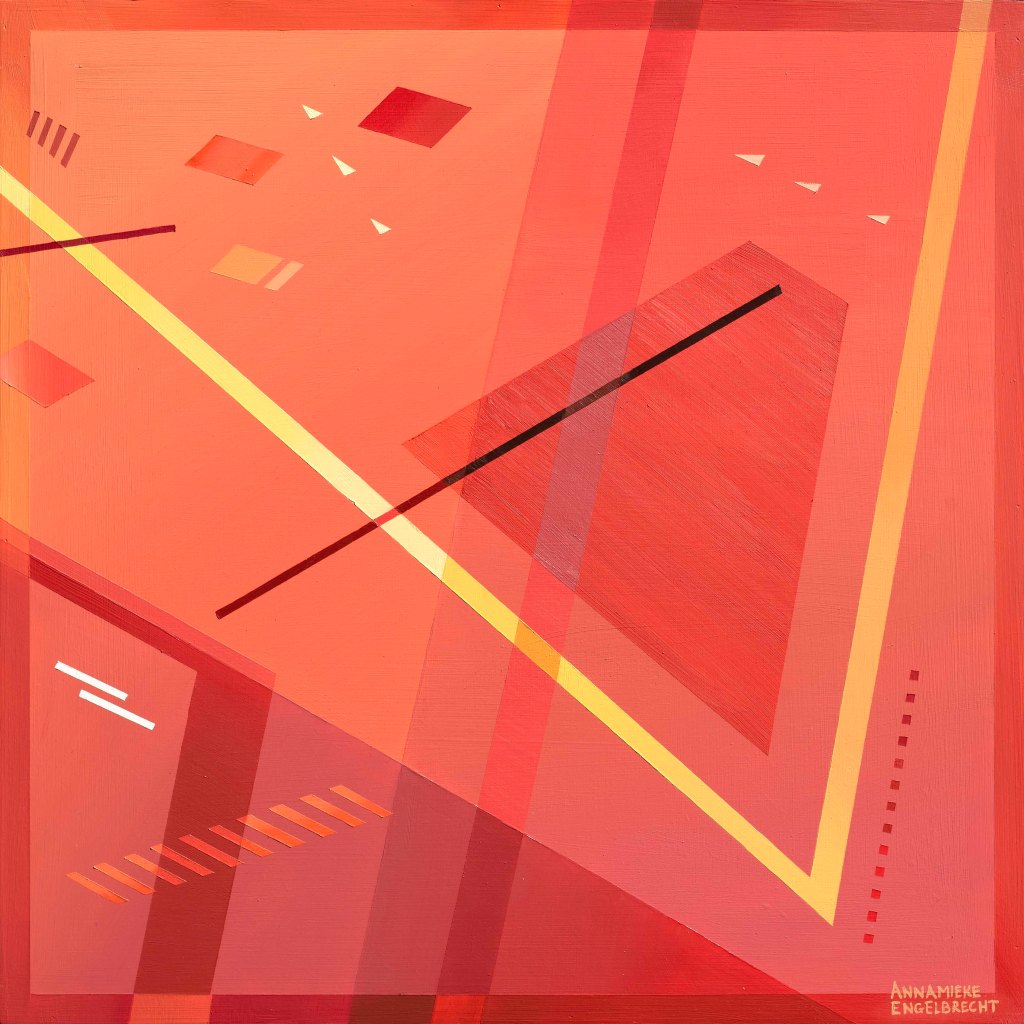
It’s a cosmic ballet choregraphed by the forces of gravity
40 x 40 cm
Oil on board
Sending a Submarine to Space
84×118,5cm
Oil on board
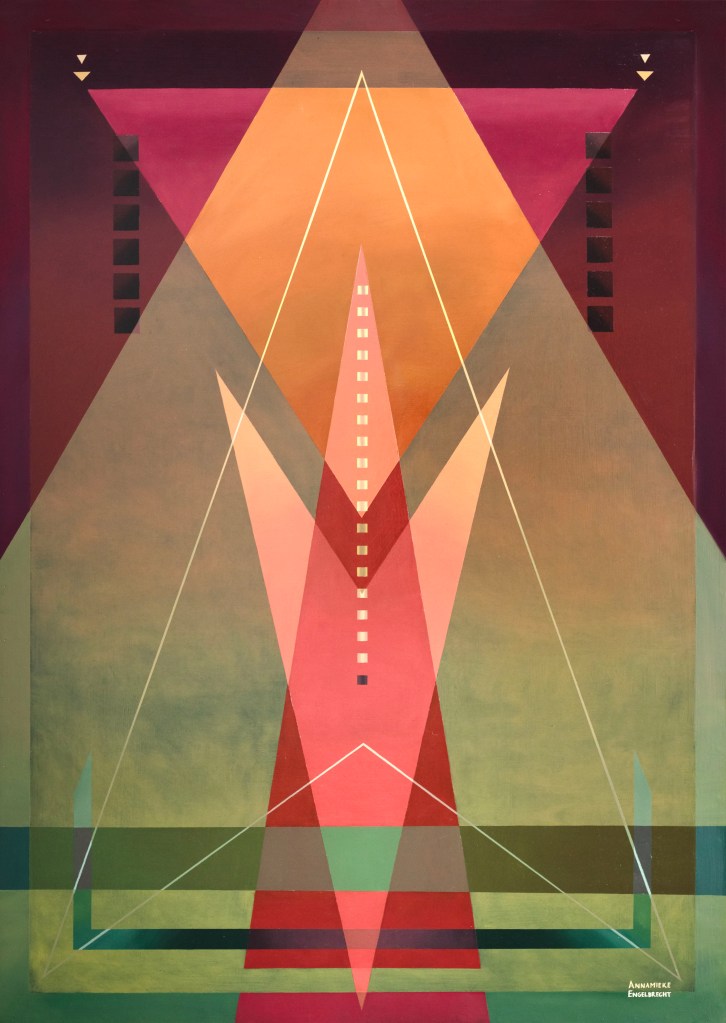
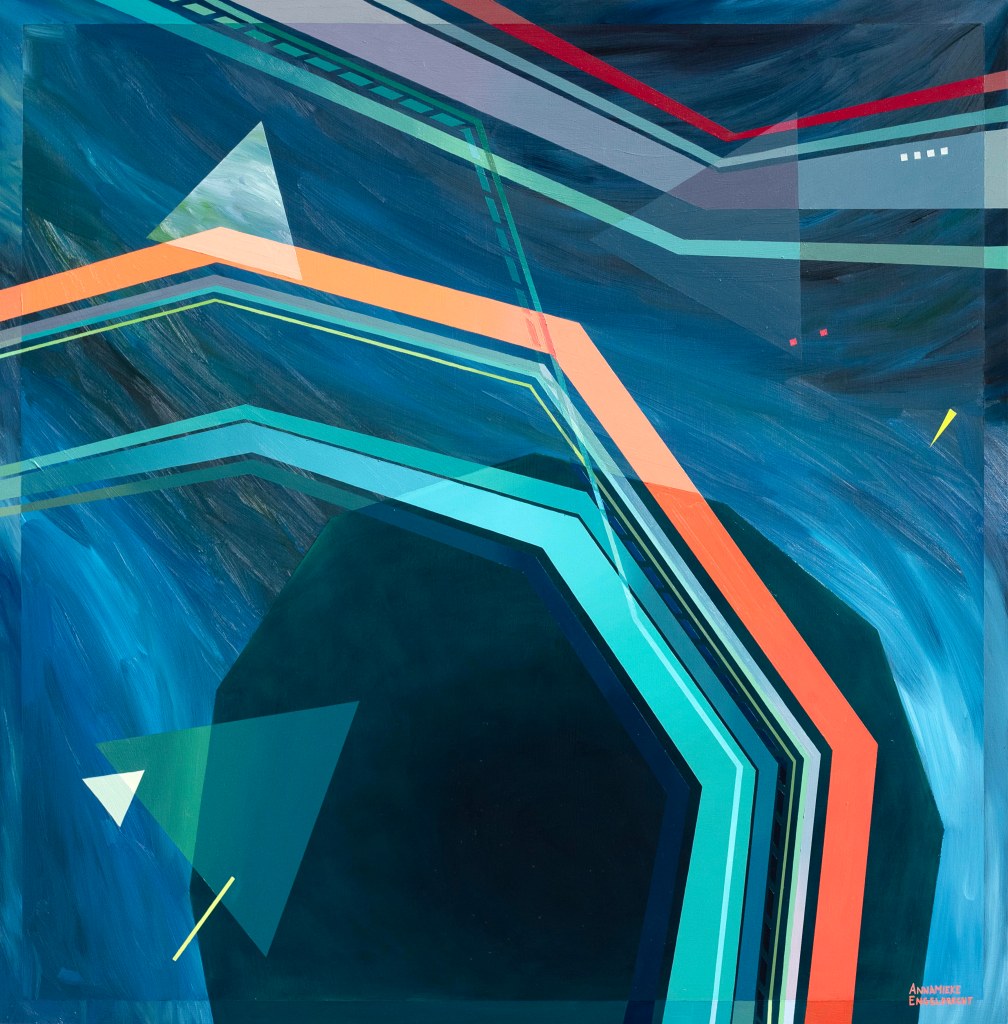
This artwork explores the absurdity of sending a submarine into space, drawing a powerful analogy to the feeling of being an outsider in society. Just as submarines and spacecraft operate in vastly different environments, individuals navigate diverse social landscapes for unique purposes. Society, much like the ocean, has its own currents, pressures, and systems, which can present challenges for those who feel disconnected.
The buoyancy and pressure resistance that work in one environment may not be effective in another. Similarly, just as submarines depend on specific technologies for underwater exploration, people may need unique coping mechanisms and social skills to navigate the complex dynamics of human interaction. The stark contrasts in atmospheres, both literal and figurative, highlight the need for adaptation and understanding when dealing with the feeling of being an outsider in the intricate social ecosystem.
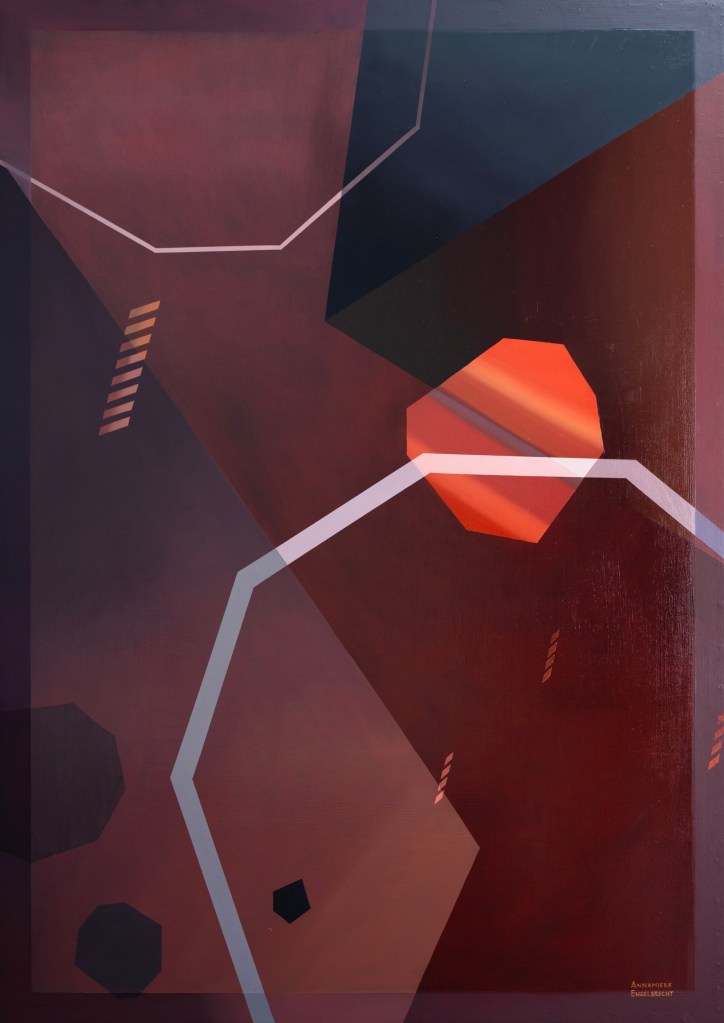
Saturn’s rings are falling down
84 x 118,5 cm
Oil on board
In several of my paintings, I draw inspiration from intriguing astronomical facts, weaving common themes throughout them. These themes revolves around the impending end of the world, the overwhelming vastness of the universe that surpasses human comprehension, and the enigmatic mysteries that may forever elude explanation.
“Saturn’s Rings are Falling Down” reflects the remarkable and scientifically grounded phenomenon that Saturn’s rings are indeed gradually disintegrating. NASA’s research indicates that the rings are losing material, with particles raining down onto Saturn’s surface at a rate that suggests they could vanish in about 100 million years—a blink of an eye in cosmic terms.
The process known as “ring rain” occurs as Saturn’s gravitational pull draws these particles inward. This celestial erosion is a stark reminder of the temporality that pervades even the grandest of natural spectacles. The painting captures the moment of this disintegration, a poetic visualization of cosmic impermanence.
Another key theme running through my work is the overwhelming vastness of the universe, a concept that surpasses human comprehension. For instance, the observable universe is estimated to be about 93 billion light-years in diameter, containing approximately two trillion galaxies. Each galaxy, like our Milky Way, is home to billions of stars and potentially even more planets. This sheer scale is almost unfathomable and serves as a backdrop to the tiny and fleeting nature of human life.
This vastness often invoke a sense of awe and existential introspection. The overwhelming scale of the universe dwarfs human concerns and ambitions, reinforcing the notion that, in the grand cosmic narrative, humanity is but a minor character.
Lastly, the enigmatic mysteries that may forever elude explanation are a significant source of inspiration. The universe is replete with phenomena that challenge our understanding and defy current scientific explanation. Dark matter and dark energy, which together comprise about 95% of the universe, remain largely mysterious. Black holes, with their event horizons beyond which nothing can escape, pose profound questions about the nature of space, time, and reality itself. The Fermi Paradox, which questions why, despite the high probability of extraterrestrial life, we have yet to encounter any evidence of it, adds to the sense of cosmic mystery.
These enigmatic elements inspire artworks that explore the unknown and the unknowable. They evoke a sense of wonder and curiosity, prompting viewers to ponder the limits of human knowledge and the possibility that some aspects of the universe may remain beyond our grasp. The mysterious and often unsettling nature of these phenomena is a testament to the complexity and vastness of the cosmos.
By drawing from these concepts, the paintings create a space for contemplation and awe, highlighting the delicate balance between knowledge and mystery in our quest to comprehend the universe.
I’ll be dancing in the sulfuric acid rain on Venus
84 x 118,5 cm
Oil on board
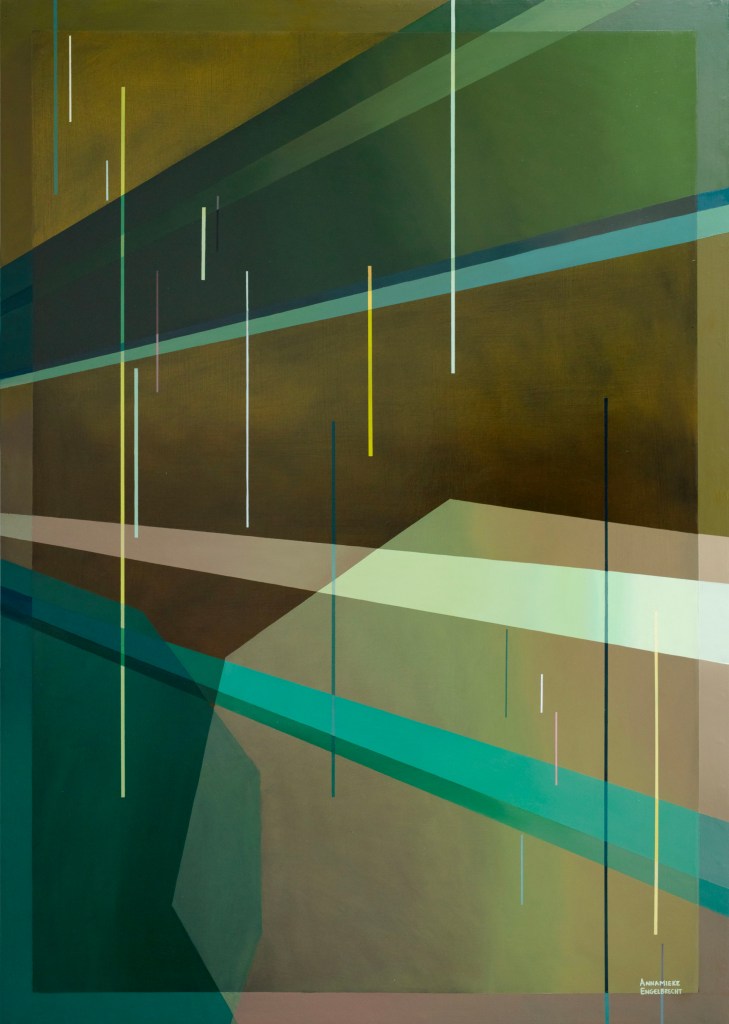
This artwork serves as a commentary on the negligible significance of human existence within the vast, indifferent cosmos. This painting juxtaposes the joy of dance, an activity often symbolizing life and happiness, with the hostile environment of Venus, thereby amplifying the theme of existential insignificance.
Venus is infamous for its extreme conditions. With surface temperatures soaring around 500 degrees Celsius, it is the hottest planet in our solar system. The atmosphere is dense with carbon dioxide, and clouds of sulfuric acid perpetually shroud the planet. These clouds create a potent sulfuric acid rain, which, rather than reaching the surface, evaporates due to the planet’s intense heat, creating an environment that is utterly inhospitable to life as we know it.
In this painting, the dance is portrayed in stark contrast to the brutal landscape. The dancer, embodying human joy and expression, appears vulnerable and fragile against the overwhelming and relentless forces of nature. This setting of Venus, with its volcanic plains and craggy mountains covered in acid, becomes a powerful symbol of the cosmic forces that operate beyond human control or comprehension.
The corrosive sulfuric acid rain in the artwork is more than just a literal depiction of Venusian weather; it symbolizes the inevitable decay and destruction that awaits all living things. This element serves as a reminder of the ephemeral nature of human life, and the futility of our struggles against the immense and indifferent universe. The rain’s capability to dissolve even the strongest materials reflects the unstoppable march of time and the eventual erasure of all human endeavors.
Furthermore, the melancholic atmosphere of the painting evokes a sense of desolation and loneliness. The solitary dancer on Venus emphasizes the isolation of human existence when viewed against the backdrop of the universe. It underscores the idea that, despite our efforts to find meaning and connection, we are ultimately alone in a vast, uncaring cosmos.
Time is the cosmic conductor
60 x 60 cm
Oil on board
When you fall into the eye of eternity, you’ll witness the entire future history of your universe unfold
75x75cm
Oil on board
You can’t get more humble than staring into the abyss of the universe
75 x 75 cm
Oil on board
The serpent in the sky will kill us all
100 x 160 cm
Oil on board
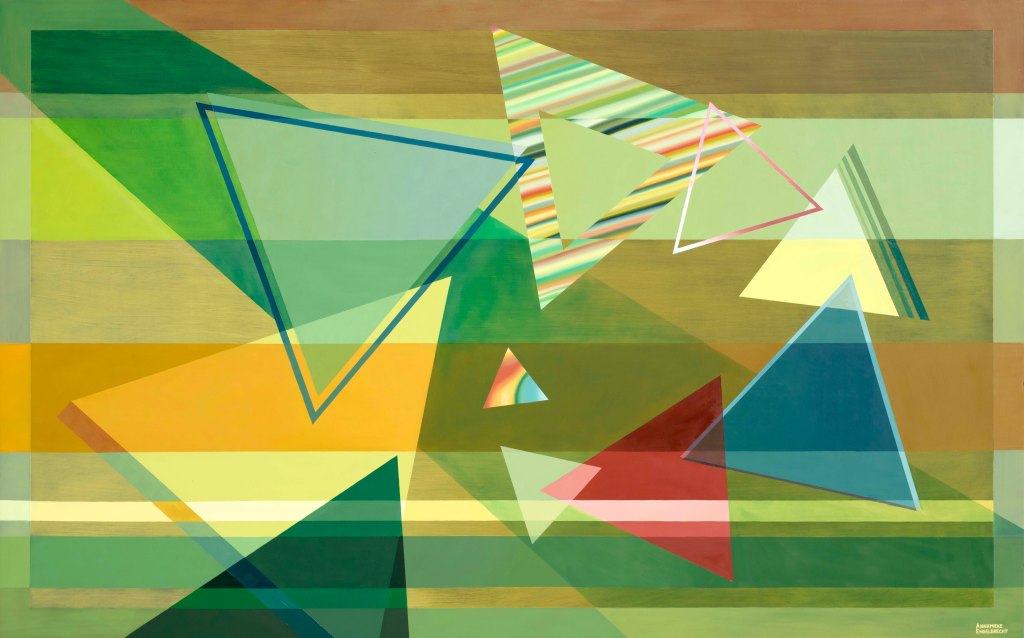
“The Serpent in the Sky Will Kill Us All” is a painting inspired by the series “Ancient Apocalypse,” created by Graham Hancock. Hancock is known for promoting theories about ancient civilizations and hypothetical lost lands, which are often considered pseudoscientific by the academic community. This controversy, in my opinion, adds an exciting element to the interpretations.
This painting delves into mythological themes. In many ancient cultures, serpents or dragons are powerful symbols representing chaos, danger, or transformative forces. This symbolism I mirrored in the structural use of triangles in the painting, highlighting their strong, enduring nature—a nod to the architectural significance of triangles throughout history.
The title of the painting suggests a cataclysmic event, echoing the themes explored in “Ancient Apocalypse.” The series investigates historical accounts and theories of worldwide cataclysmic events that may have wiped out ancient civilizations. For instance, Hancock discusses the Younger Dryas impact hypothesis, which suggests that a comet impact around 12,800 years ago caused massive climate changes and contributed to the extinction of megafauna and the collapse of early human cultures. He examines ancient myths and legends from various cultures that speak of great floods, fires, and other disasters, interpreting them as possible accounts of these catastrophic events.
Although Hancock’s work seeks to unravel these ancient myths and their historical implications, the saying “history may repeat itself” resonates deeply with this painting. It points to a specific disaster or cosmic event yet to come, such as a comet or meteor strike, often depicted in ancient myths as a serpent or dragon in the sky. This impending catastrophe serves as a modern interpretation of ancient warnings, blending mythological symbolism with contemporary concerns about planetary threats.
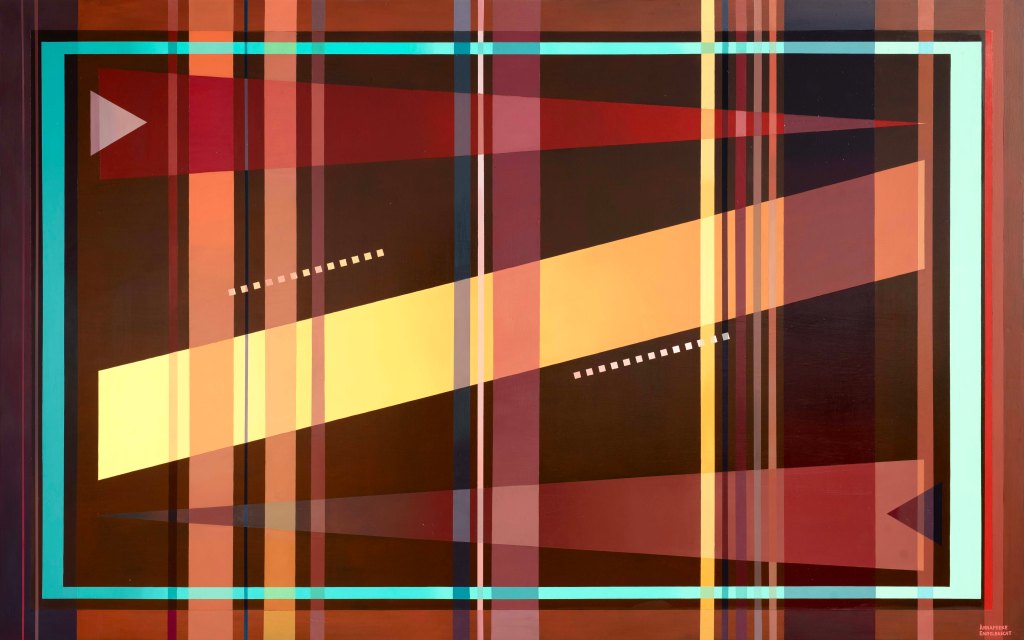
You should learn dolphin clicks to communicate with aliens
100 x 160 cm
Oil on board
The painting’s title “You should learn dolphin clicks to communicate with aliens” is speculative rather than based on established scientific fact, but it can be supported by some intriguing facts and theories.
The study of dolphin communication has revealed that dolphins can convey detailed information, recognize themselves in mirrors, and understand abstract concepts. Dolphins have one of the most complex communication systems in the animal kingdom, utilizing a variety of clicks, whistles, and body language. Some scientists believe that understanding dolphin communication might offer insights into non-human intelligence and complex language systems.
The Search for Extraterrestrial Intelligence (SETI) often considers the possibility that alien civilizations might communicate in ways entirely different from human languages. Some researchers propose that by studying the communication systems of highly intelligent non-human species, like dolphins, we might better prepare for the potential discovery of extraterrestrial signals.
Just as dolphins use clicks and whistles, humans have developed various forms of communication beyond spoken language, such as Morse code and digital signals. The idea of using dolphin-like communication to interact with aliens is a fascinating theory, suggesting that alien communication might be more akin to the sophisticated patterns of dolphin clicks than human speech.
Visually, the vertical lines in this painting represent more of an abstract visualisation of sound, like how Morse code transmits information through in specific patterns. All these lines and shapes aim to capture the rise and fall of frequencies and the variations in volume that might be used to communicate with a non-human being. I really enjoy your explanation of the horizontal and vertical lines, though my background in spiritual practices and philosophy is somewhat limited. I don’t consider myself particularly philosophical, so I can’t contribute much to that perspective. As we both know, interpretations of abstract art can vary widely based on factors such as upbringing, education, culture, personal experiences, and background. But also something to think about is that symbols that you’ve mentioned are deeply ingrained in our culture and subconscious, which means they may influence my work in ways I might not fully realise.
The stars nearby have seen the Simpsons,
75 x 75 cm
Oil on board
The loneliest place is the far side of the moon,
60 x 60 cm
Oil on board
Say Cheese for Cassini
40 x 40 cm
Oil on board
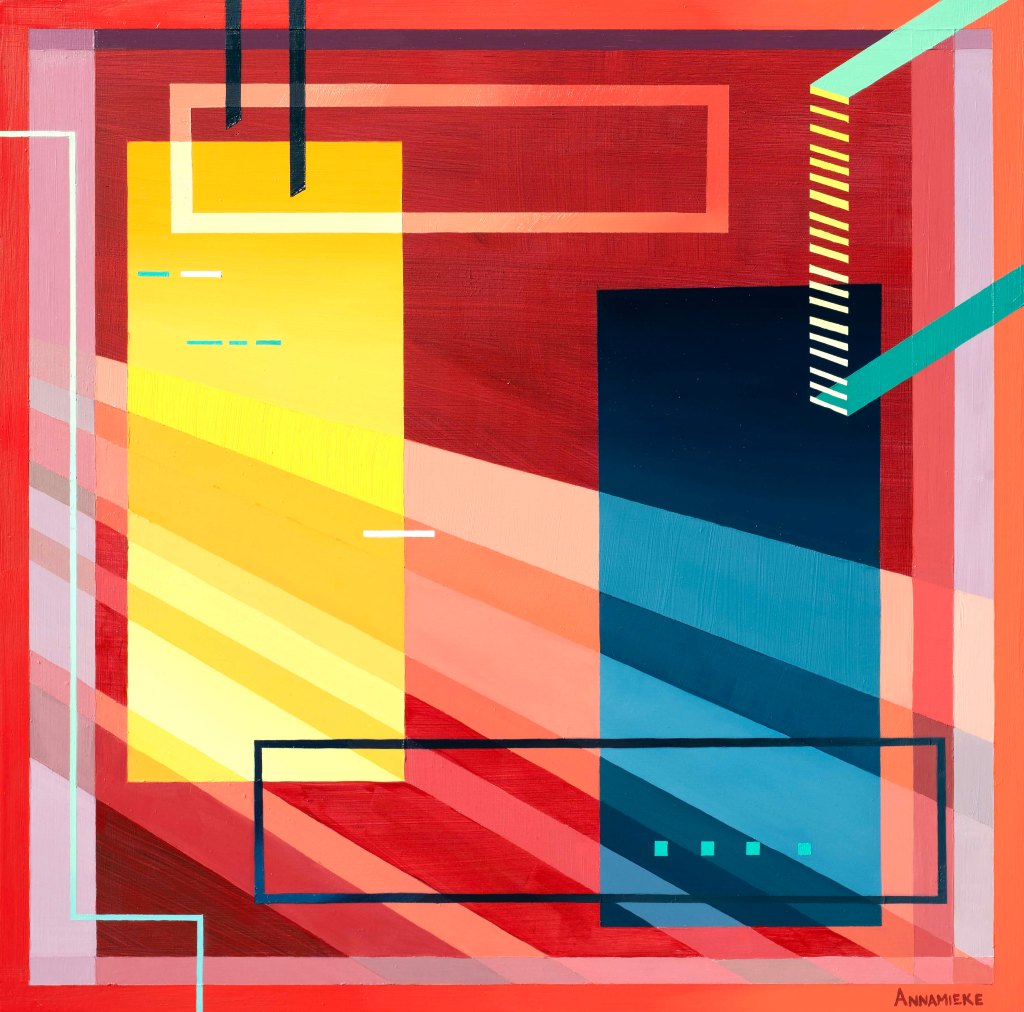
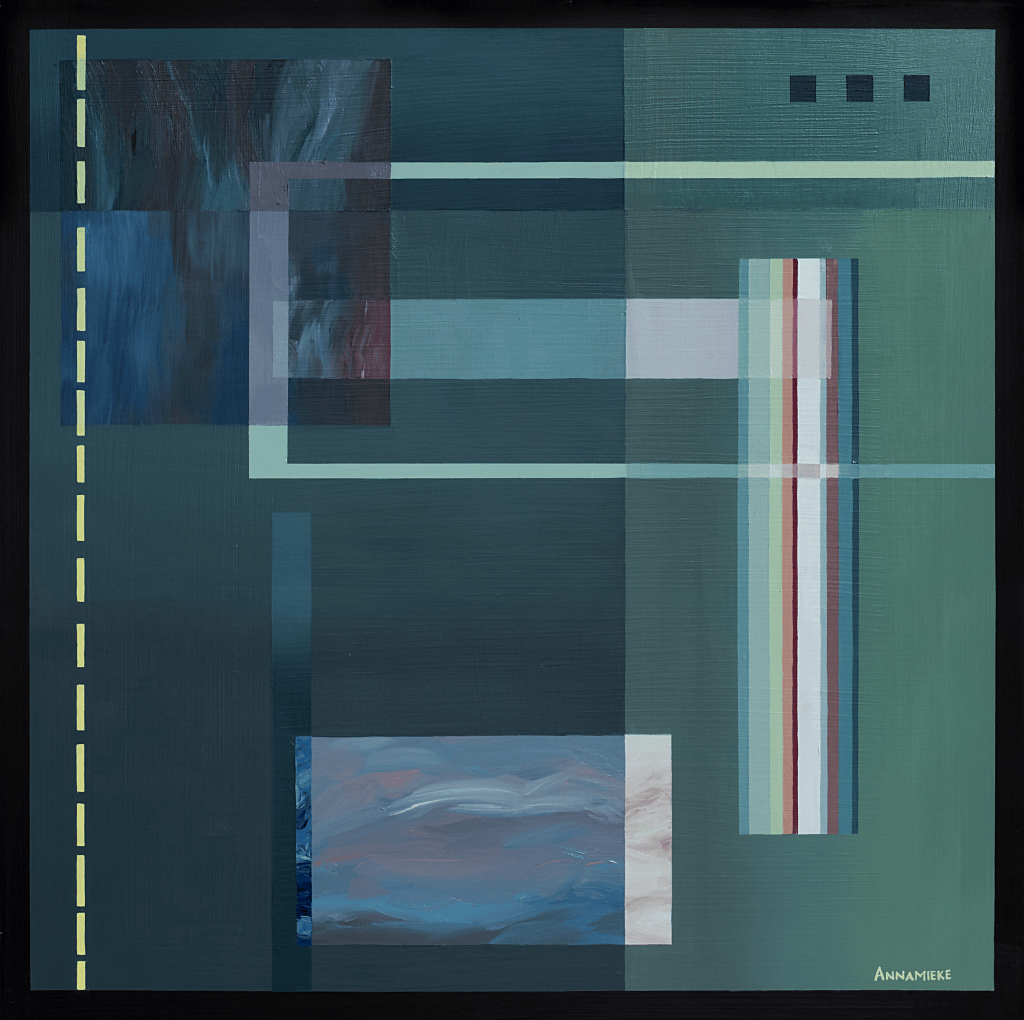
Save me a slice of time
40 x 40 cm
Oil on board
Long walks to the edge of the universe
40 x 40 cm
Oil on board
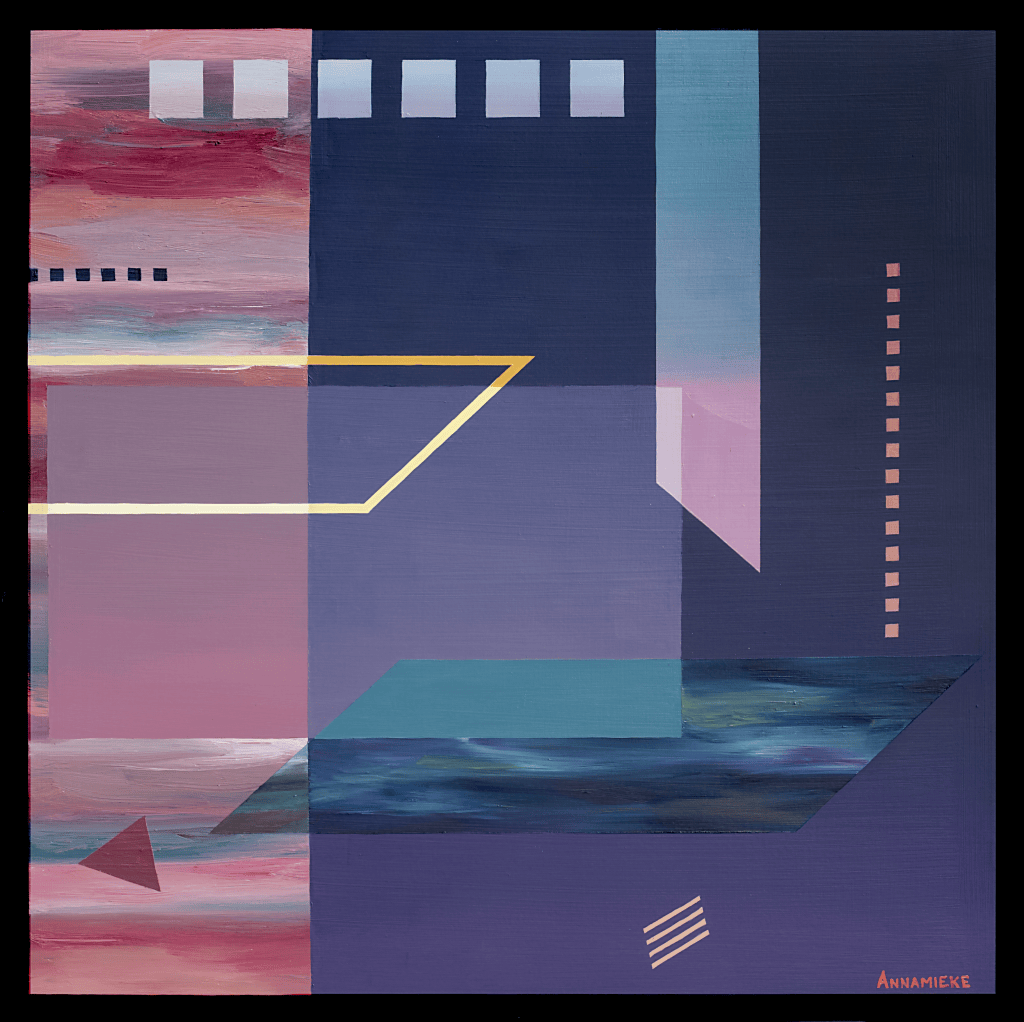
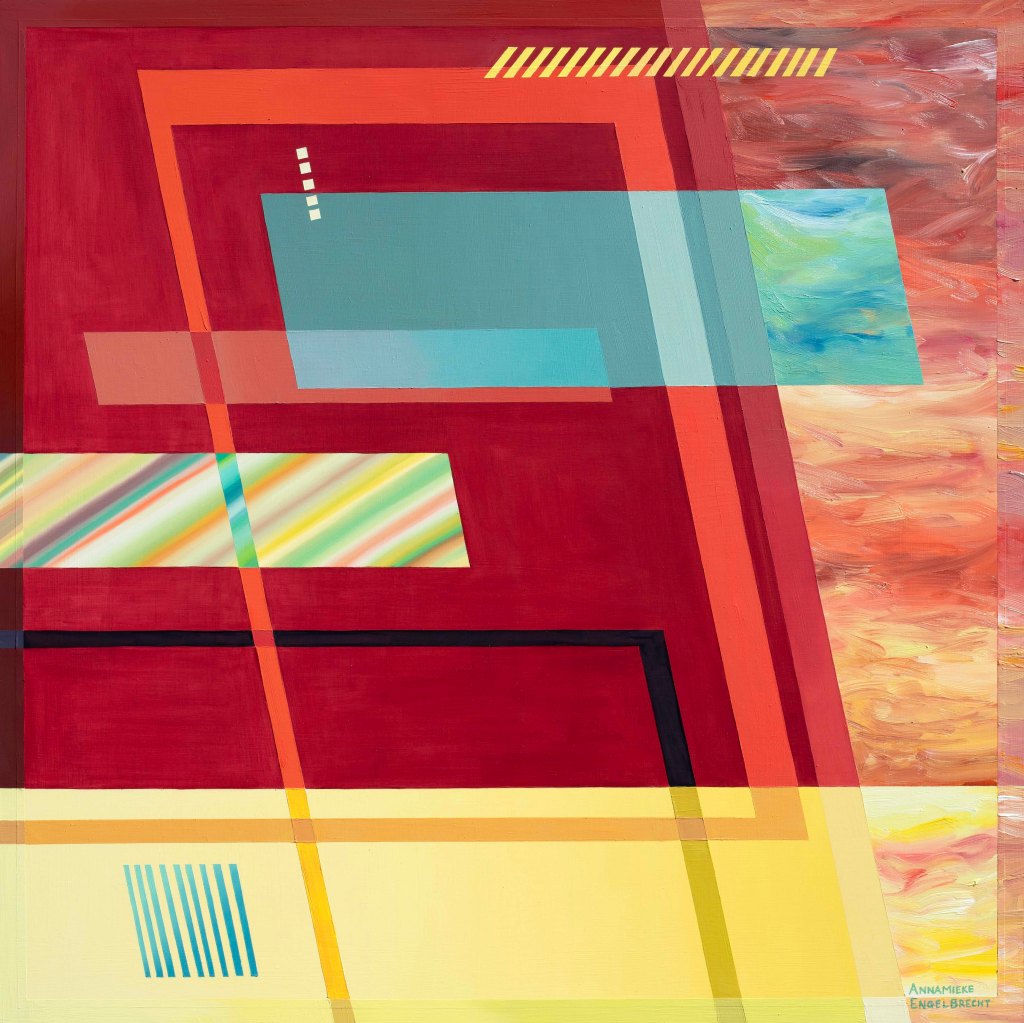
The sun is the rock star of the sky that you definitely don’t want to hear up close,
60 x 60 cm
Oil on board
Of course Saturn brought its own ringlight
75 x 75 cm
Oil on board
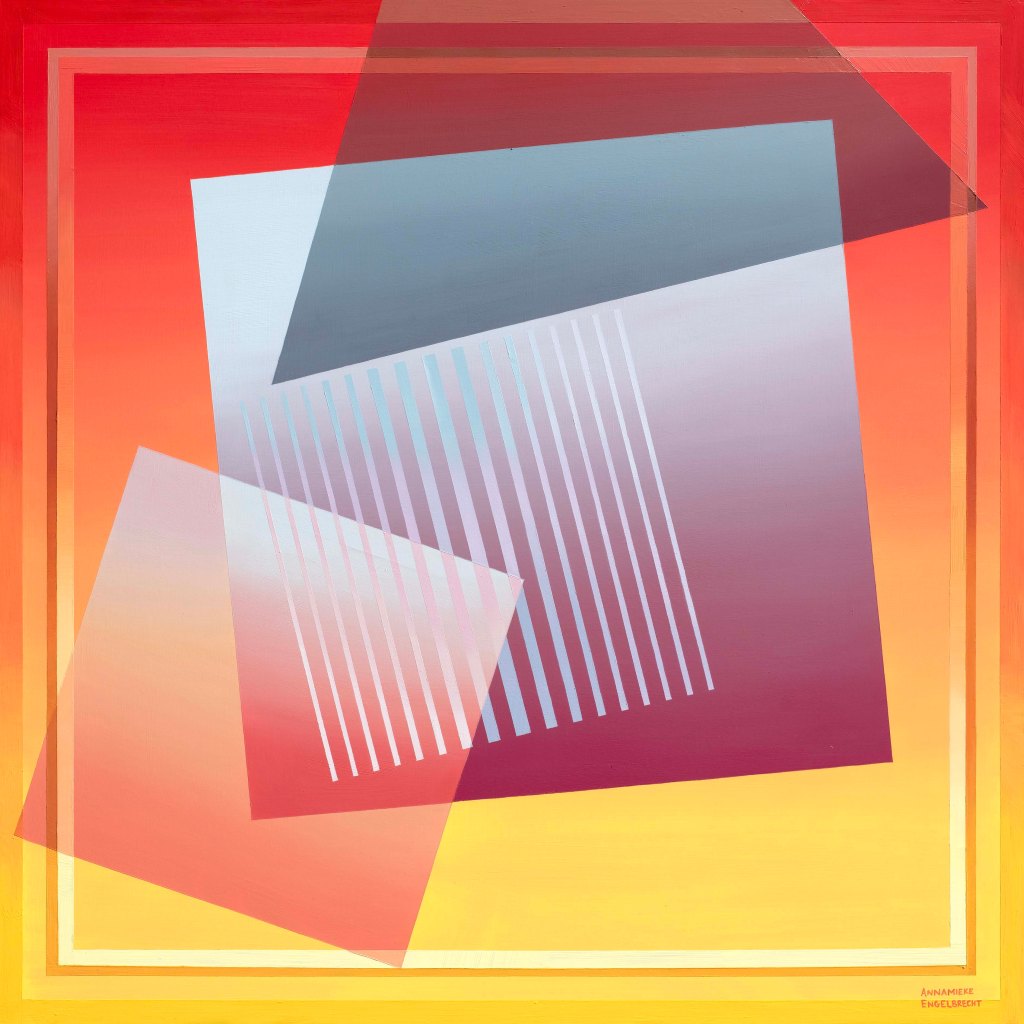
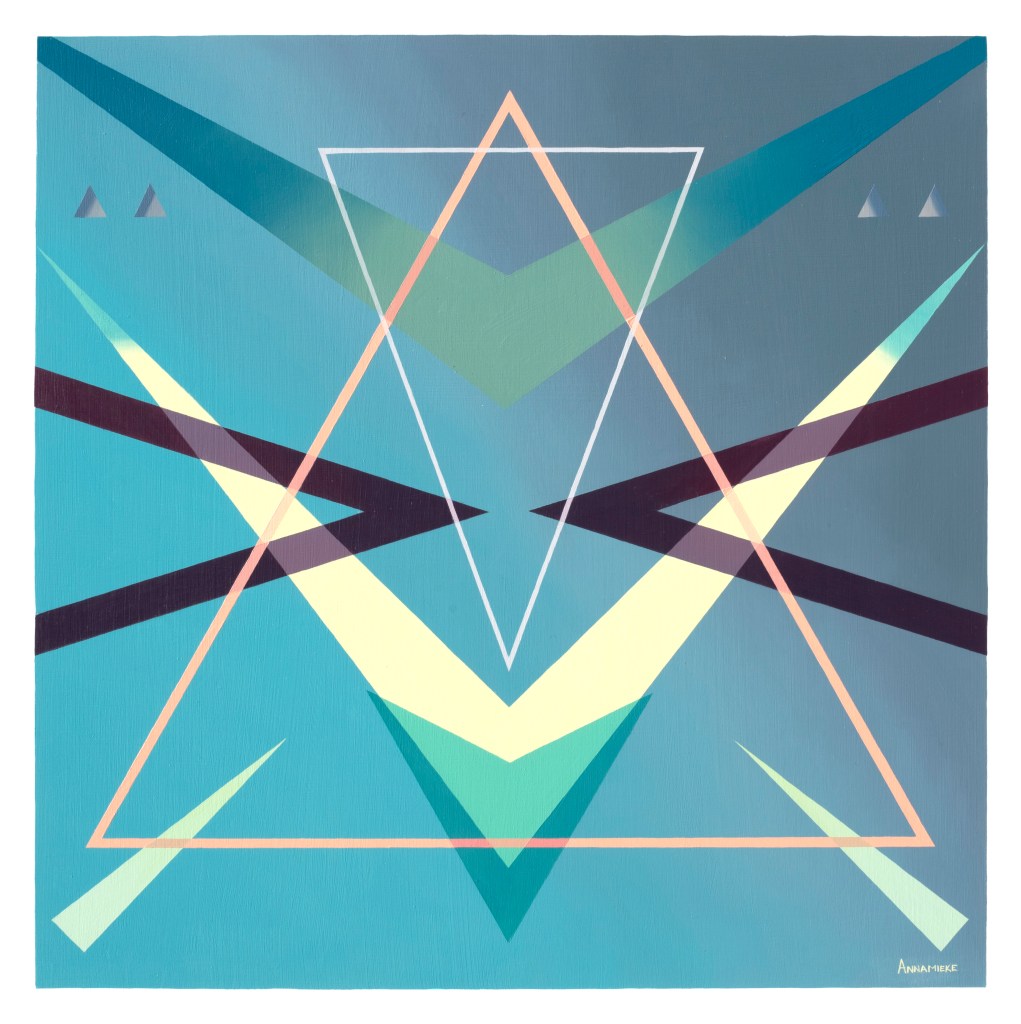
Give Me Deep Space
50 x 50 cm
Oil on board
12-ft-tall people once roamed the earth in abundance
60 x 120 cm
Oil on board
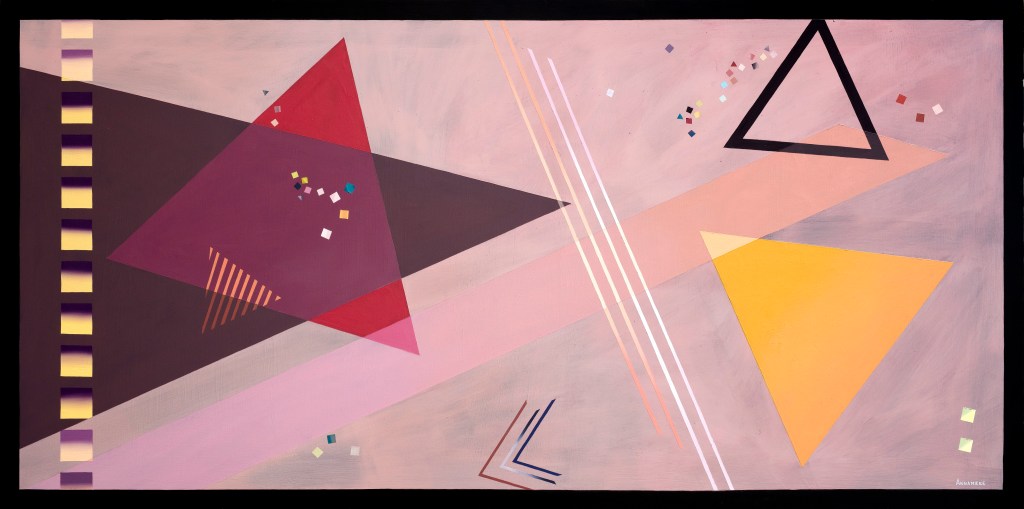
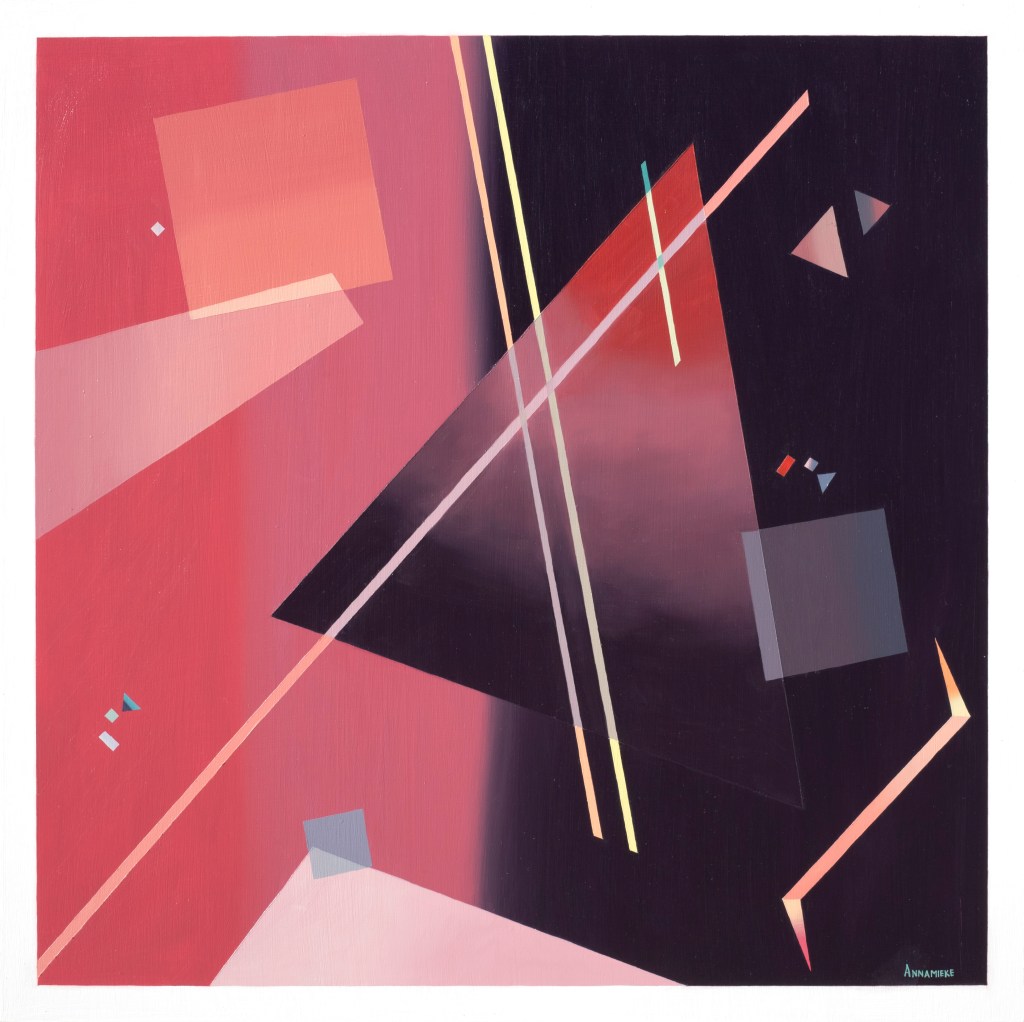
Who controls the memes, controls the universe
50 x 50 cm
Oil on board
Bellyflopping Into The Future
75 x 75 cm
Oil on board
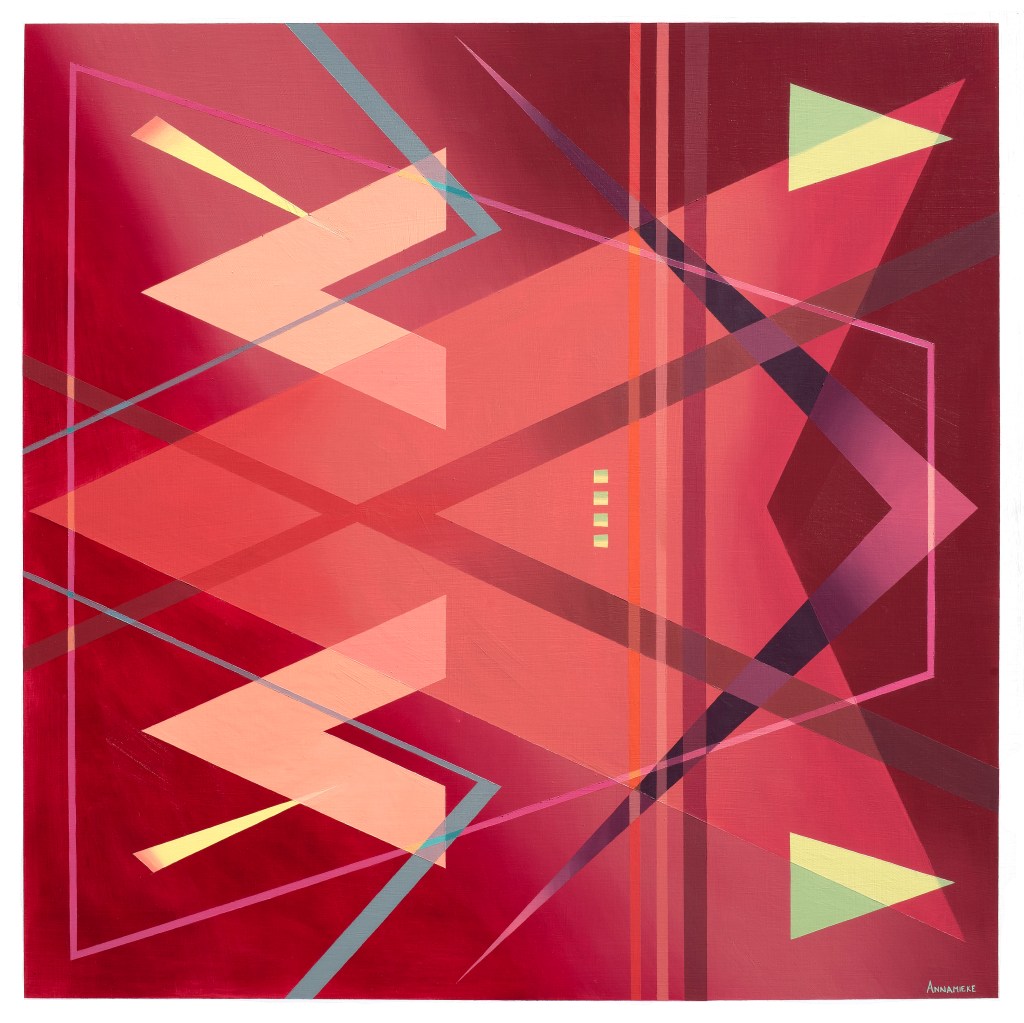
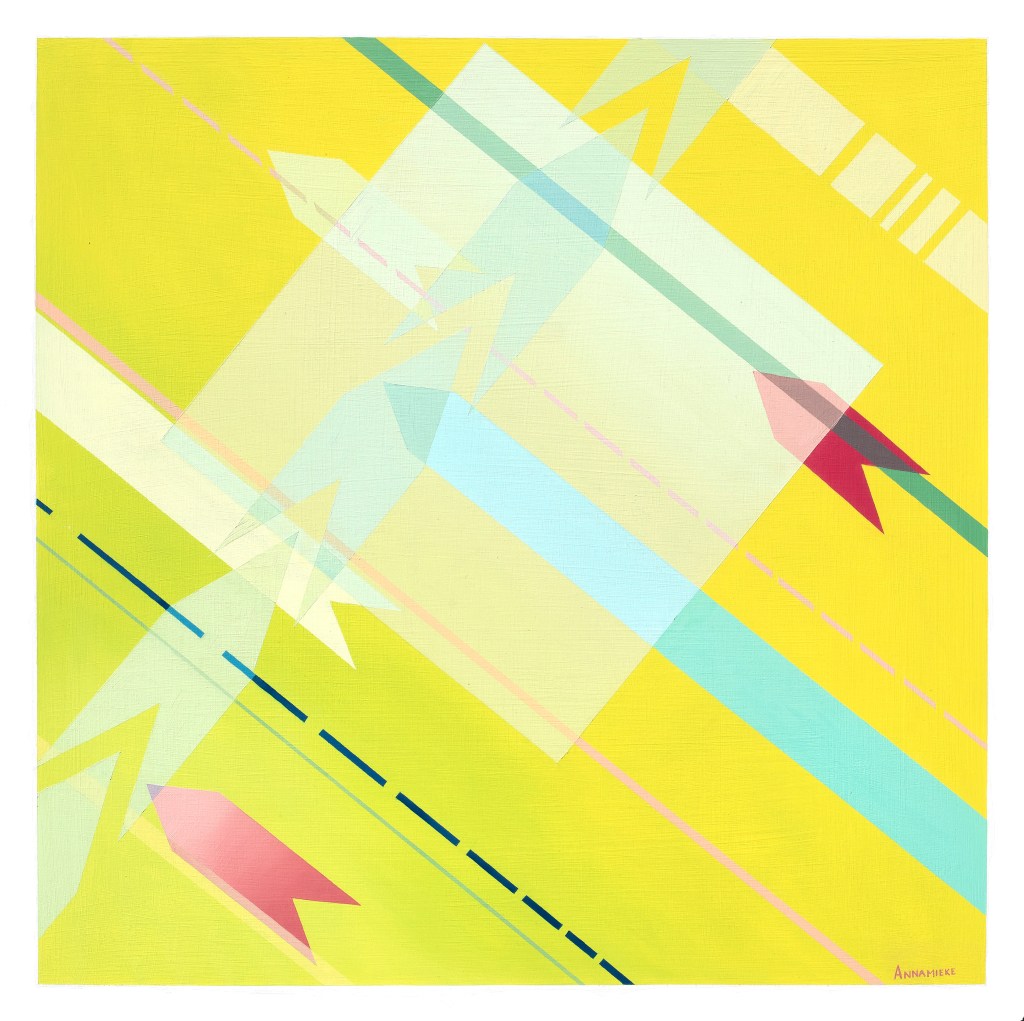
Follow for Follow
50 x 50 cm
Oil on board
The Joy Of Missing Out
75 x 75 cm
Oil on board
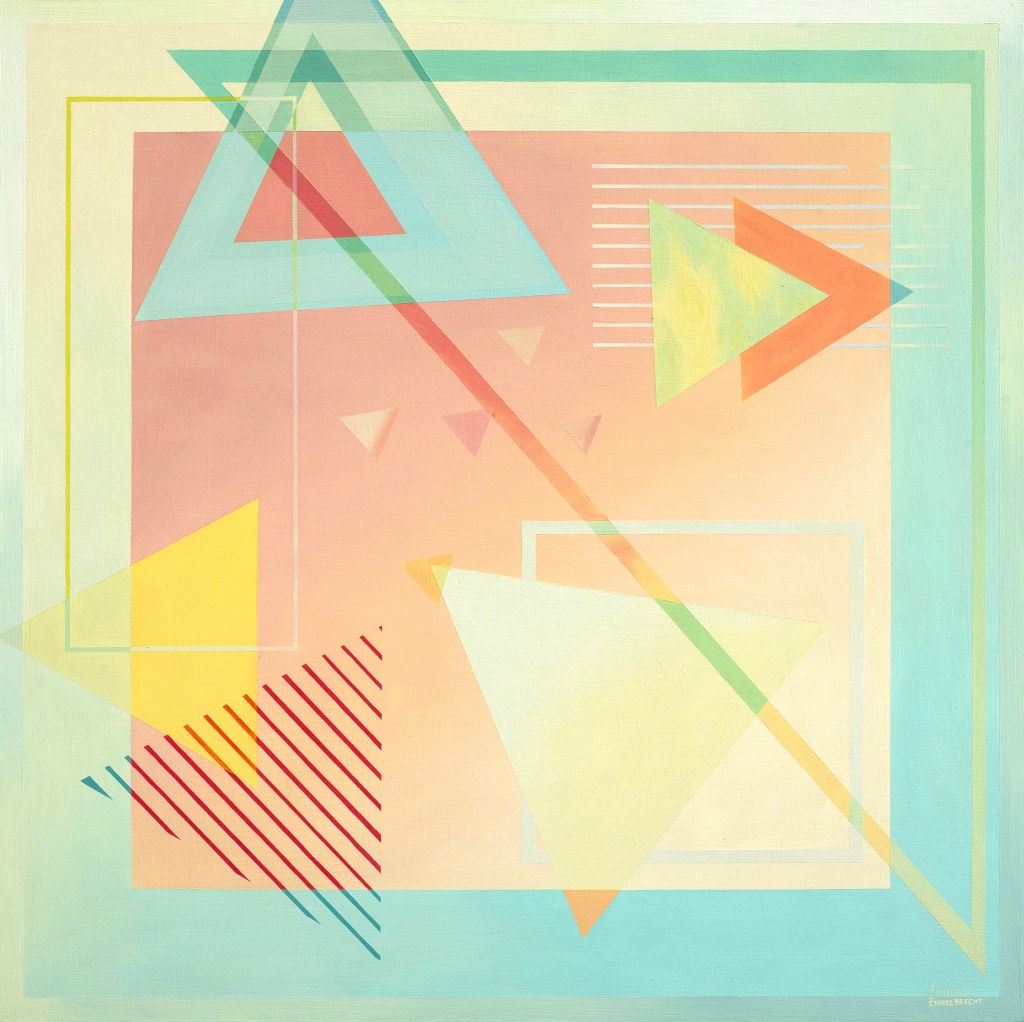
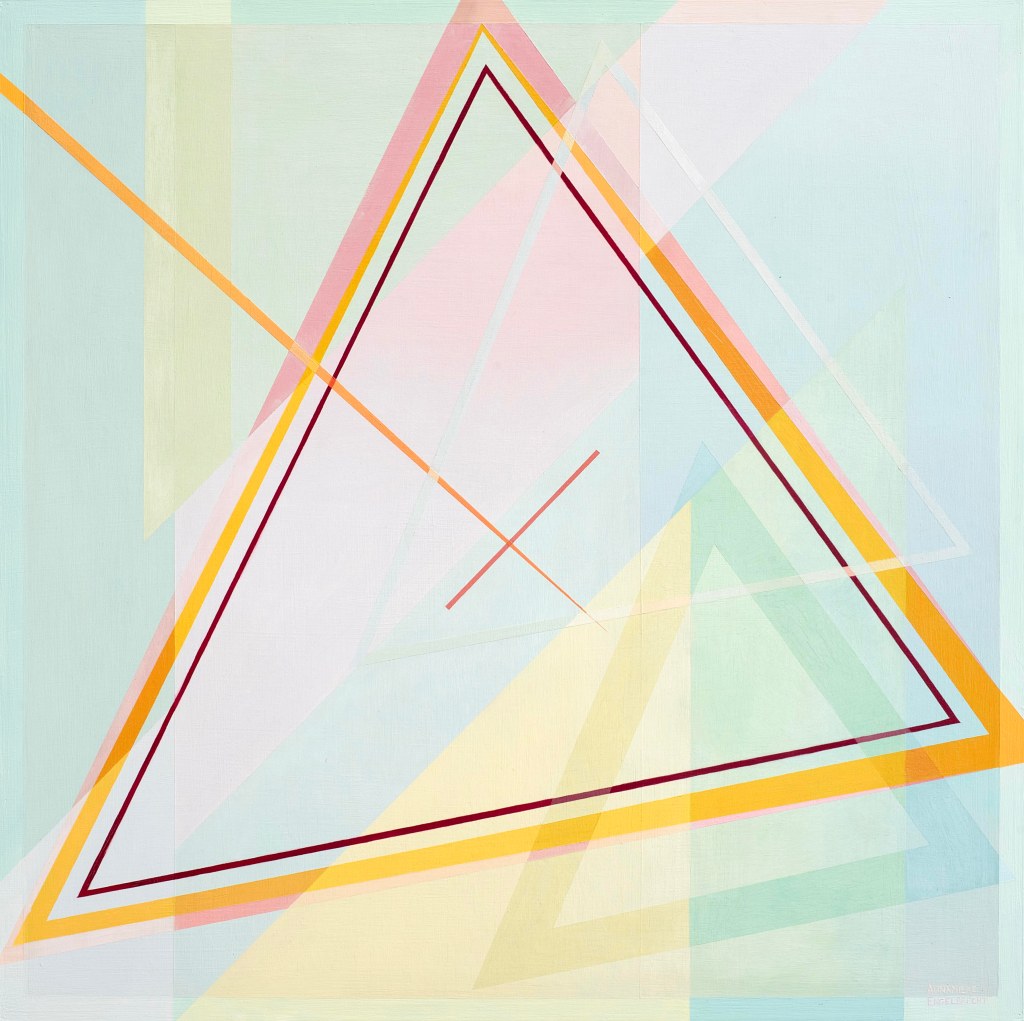
One day, we will go ice fishing on Europa
75 x 75 cm
Oil on board
Just so you know
75 x 75 cm
Oil on board
Explain like I’m 5
75 x 75 cm
Oil on board
That dinosaur
60 x 60 cm
Oil on board
spieël – spieël (series)
60 x 165 cm each
Oil on board


Leave a Reply